
The Ultimate Guide to Industrial Ammonia Gas: Synthesis, Production, and Applications
This article is for everyone who needs to understand the backbone of modern industry: ammonia. We'll dive deep into what ammonia gas is, how it's made, its vast applications, and what to look for in a trustworthy supplier. This isn't just a technical overview; it's a practical guide from a factory owner to a business owner, designed to give you the clarity and confidence you need to make the best purchasing decisions.
What Exactly is Ammonia Gas and What Are Its Properties?
At its core, ammonia (NH₃) is a chemical compound made of one nitrogen atom and three hydrogen atoms. It's a colorless gas with a very distinct, pungent odor—you'd recognize its sharp smell immediately. Many people associate this smell with household cleaning products, which often contain ammonium hydroxide, an aqueous solution of ammonia. But its role extends far beyond cleaning. In its pure, compressed form, it's a cornerstone of industrial chemistry. The properties of ammonia make it incredibly versatile. It has a relatively low boiling point of -33.34°C (-28.01°F), which allows it to be easily liquefied under pressure for storage and transport, a critical feature for an industrial gas.
One of the most significant properties of ammonia gas is that ammonia is highly soluble in water. When this gas dissolves, it forms a basic, or alkaline, solution. This reactivity is a key reason for its widespread use in neutralizing acids and in the production of fertilizers. Despite its many benefits, it's important to remember that ammonia is toxic at high concentrations. Understanding these fundamental properties is the first step for anyone involved in purchasing or handling this vital chemical compound. The action of ammonia in various processes stems directly from this unique combination of physical and chemical traits.
The importance of this simple molecule cannot be overstated. From the food on our tables to the cool air from our refrigerators, ammonia plays a crucial role. Its ability to serve as a compact and efficient carrier of hydrogen and nitrogen makes it an indispensable raw material in many industrial processes. As we explore its synthesis and applications, you'll see how this fundamental industrial gas supports global economies and touches nearly every aspect of modern life. The widespread use of ammonia is a testament to its powerful and useful properties.
How is Industrial Ammonia Production Achieved?
The vast majority of the world's ammonia is created through a process that revolutionized agriculture and chemical manufacturing over a century ago: the Haber-Bosch process. This method for ammonia production is a feat of chemical engineering that combines atmospheric nitrogen gas with hydrogen, typically derived from natural gas or another fossil fuel, to produce ammonia. The process is elegant in concept but complex in execution, requiring high pressures (150–250 bar) and a high temperature (400–500 °C), along with an iron-based catalyst to speed up the reaction.
The synthesis of ammonia begins with hydrogen production. Methane from natural gas reacts with steam to produce hydrogen and carbon dioxide. The nitrogen is simply separated from the air we breathe. These two gases are then purified, compressed, and fed into a reactor. Inside, under immense pressure and heat, they react to form ammonia. The resulting hot gas mixture is cooled, causing the ammonia to liquefy so it can be separated, while the unreacted nitrogen and hydrogen are recycled back into the process. This continuous loop makes the industrial ammonia production process highly efficient.
As a factory owner, I can tell you that optimizing this synthesis is a constant focus. Energy efficiency is paramount, as the Haber-Bosch process is energy-intensive, accounting for over 1% of the world's total energy consumption. Innovations in catalyst technology and heat integration are always being explored to reduce costs and the environmental footprint. When you source ammonia, you are sourcing a product born from one of the most significant achievements in industrial chemistry. The quality of the final product depends entirely on the precision and control exerted over every step of this demanding ammonia synthesis process.
What Are the Most Common Industrial Uses for Ammonia?
When people ask what ammonia is used for, the answer is simple: almost everything, starting with our food. The single largest application of ammonia—accounting for over 80% of all ammonia produced globally—is for the production of fertilizers. It is the primary source of nitrogen for ammonia fertilizer products like urea and ammonium nitrate. Without this industrial gas, we couldn't sustain the crop yields needed to feed the world's population. This link to food production makes the reliable supply of ammonia a matter of global security.
Beyond the farm, ammonia has numerous industrial applications. It is a key ingredient in the production of plastics, synthetic fibers like nylon, explosives, and many pharmaceuticals. In water treatment facilities, ammonia is used to produce chloramine, a disinfectant that is more stable and has a longer-lasting effect than chlorine. The chemical industry relies heavily on ammonia as a building block for countless other industrial chemicals. Essentially, if you see a product that contains nitrogen, there's a good chance that ammonia was involved in its creation.
Furthermore, ammonia serves as a highly effective and environmentally friendly refrigerant. Long before the invention of Freon, ammonia was the refrigerant of choice for industrial refrigeration systems, and it's making a major comeback. With a Global Warming Potential (GWP) and Ozone Depletion Potential (ODP) of zero, it's an excellent alternative to synthetic refrigerants that harm the atmosphere. From large-scale food processing plants to ice rinks, ammonia refrigeration systems provide efficient cooling. This gas is used in so many hidden ways that support our daily lives. These various industrial applications highlight just how essential this gas really is.
Why is Anhydrous Ammonia Crucial for So many Industries?
The term you will often hear in industrial settings is anhydrous ammonia. This simply means ammonia that is pure and contains very little or no water (an-hydrous = "without water"). It is the fundamental form of ammonia used in almost all industrial applications. Because it's undiluted, it is the most concentrated and efficient way to transport and use nitrogen. For a farmer, applying anhydrous ammonia directly to the soil delivers the maximum amount of nitrogen nutrient to crops in a stable form. Its purity is what makes it so potent and effective.
In the world of metal treatment, ammonia is dissociated (broken down) into hydrogen and nitrogen at high temperature. This mixture is then used to harden metal surfaces in a process called nitriding. The nitrogen atoms diffuse into the surface of steel parts, creating a very hard casing that resists wear and corrosion. It’s also used as a protective atmosphere in furnaces to prevent oxidation during annealing. In some welding applications, dissociated ammonia can be used as a so-called shield gas. Its role here is critical for manufacturing durable, high-performance metal components.
Finally, in chemical synthesis, anhydrous ammonia is a powerful solvent and a versatile reagent. Ammonia is also used in the production of nitric acid, which is a precursor for everything from dyes to rocket propellants. Its ability to act as a base makes it invaluable for neutralizing acidic byproducts in chemical reactions. When a procurement officer like Mark Shen orders ammonia, they are typically ordering this pure, anhydrous form, because its concentration and lack of impurities are essential for the integrity of these various industrial processes. Its purity ensures predictable and reliable results, which is non-negotiable in high-stakes manufacturing.
"In my 30 years in chemical procurement, I've learned one thing: the purity of your raw materials dictates the quality of your final product. With ammonia, there is no room for compromise. A reliable source of high-purity anhydrous ammonia is the foundation of a stable production line." - Industry Veteran
What Are the Key Hazards of Ammonia Exposure and How Can They Be Mitigated?
Despite its widespread use, we must always respect the hazards of ammonia. It is classified as a toxic and corrosive substance. Exposure to ammonia can cause severe irritation to the skin, eyes, throat, and lungs. Because ammonia is highly soluble in water, it readily seeks out moisture in the body, leading to chemical burns. Inhaling high levels of ammonia can be fatal. The primary risk in industrial settings comes from accidental releases from pressurized storage tanks or pipelines. This is why strict safety protocols are not just a recommendation; they are a requirement.
Mitigating the risks of ammonia exposure starts with engineering controls. Facilities that use ammonia must have robust ventilation systems and leak detection sensors that can trigger alarms and automated shutdowns. Personal Protective Equipment (PPE) is the next line of defense. Anyone working near quantities of ammonia must be equipped with and trained to use respirators, chemical-resistant gloves, and gas-tight goggles or face shields. We ensure all our employees are rigorously trained on these procedures.
Perhaps the most critical mitigation strategy is emergency preparedness. Every facility must have emergency showers, eyewash stations, and a clear, well-rehearsed evacuation plan. Training employees on what to do if exposure to ammonia can cause an issue is paramount. It’s not just about handling the gas safely during normal operations; it's about knowing exactly how to react when something goes wrong. For a buyer, this is crucial. A supplier who prioritizes and can demonstrate these safety measures is one who understands the true nature of the product they are selling. When you're dealing with a powerful industrial gas like ammonia, you need a partner who values safety as much as you do.
How Should the Safe Storage of Ammonia Be Managed?
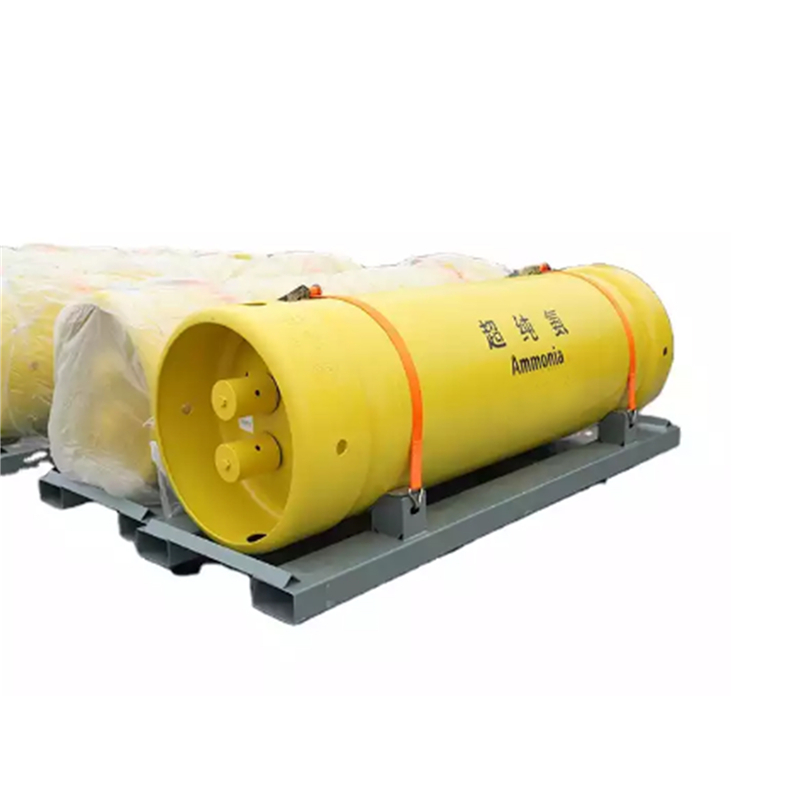
The proper storage of ammonia is a critical aspect of managing its risks and ensuring a stable supply. Since ammonia has a high vapor pressure at ambient temperatures, ammonia must be stored either as a liquid under pressure or in a fully refrigerated state at atmospheric pressure. Smaller quantities are typically stored in pressurized cylinders or tanks, like the Low temperature insulated gas cylinder we provide. These containers are built to withstand high pressures and are equipped with pressure relief valves to prevent catastrophic failure in case of over-pressurization.
For larger quantities of ammonia, such as those found at production facilities or major distribution hubs, refrigerated storage is more common. The ammonia is cooled to its boiling point (-33 °C) and stored in large, well-insulated tanks. This method reduces the pressure inside the tank, making it inherently safer. However, it requires a continuous refrigeration system to maintain the low temperature, which adds complexity and cost. Both methods require regular inspection and maintenance of tanks, pipes, and valves to ensure their integrity.
As a supplier, we understand that logistics and storage are key concerns for our customers. We ensure that our ammonia is packaged and transported in compliance with all international standards. The cylinders and tanks we use, whether for pure ammonia or for Gasmixture products, are tested and certified. Materials used for storing ammonia must be carefully selected—for example, it corrodes copper, brass, and zinc, so steel is the material of choice. Proper labeling, secure handling procedures, and clear documentation are all part of a comprehensive safety system that ensures the gas arrives at your facility safely and ready for use.
What is the Environmental Impact of Ammonia and the Rise of Green Ammonia?
We have to be honest about the environmental impact of ammonia production. The traditional Haber-Bosch process is heavily reliant on fossil fuel, specifically natural gas, both as a feedstock for hydrogen and as an energy source to power the high-temperature, high-pressure reaction. This process is a significant source of carbon dioxide (CO₂) emissions, a major greenhouse gas. As the world moves towards decarbonization, the industrial gas sector is actively seeking cleaner ways to make ammonia.
This challenge has given rise to the concept of "green ammonia." This is ammonia produced using a process that is entirely free of carbon emissions. The synthesis method is the same, but the inputs are different. The hydrogen is produced via water electrolysis powered by renewable energy sources like wind or solar, and the nitrogen is still separated from the air. The resulting ammonia molecule is identical, but its production leaves a minimal environmental footprint. While still more expensive than traditional methods, the cost of green ammonia is expected to decrease as renewable energy becomes cheaper and more widespread.
Although ammonia itself can be a pollutant if released into waterways (where it is harmful to aquatic life), its biggest environmental concern is its production. The transition to green ammonia represents a massive opportunity. It not only cleans up the production of fertilizer and industrial chemicals but also positions ammonia as a potential carrier for renewable energy. The industry is at a turning point, and as a forward-thinking producer, we are closely watching and investing in technologies that will make the production of ammonia sustainable for generations to come.
How Can You Verify the Quality and Certification in Ammonia Synthesis?
For a buyer like Mark Shen, whose business relies on reselling gases to manufacturing companies, quality and certification are non-negotiable. The pain point of certificate fraud is real and can have severe consequences. So, how do you ensure the ammonia you're buying meets the required purity levels and is backed by legitimate documentation? The first step is to demand a Certificate of Analysis (COA) for every batch. This document, provided by the supplier, details the exact composition of the gas, including the purity of the ammonia and the levels of ammonia impurities like water and oil.
However, a certificate is only as trustworthy as the company that issues it. This is where a supplier's reputation and transparency come into play. A reliable supplier should be willing and able to walk you through their quality control processes. At my factory, for instance, we use advanced gas chromatography to analyze our products. We welcome third-party inspections and audits from our clients. We believe in building trust through transparency. You should be able to ask, "Show me your lab, show me your testing procedures, show me your quality management certifications like ISO 9001." A hesitant or vague answer is a major red flag.
Don't be afraid to ask for references. Speak to other customers, particularly those in your region or industry. Their first-hand experience is invaluable. When discussing logistics, ask about the specific measures they take to prevent contamination during filling and transport. For example, dedicated cylinders for specific gases, like our specialized Hydrogen cylinder, prevent cross-contamination. Ultimately, verifying quality is about due diligence. It requires a partnership with a supplier who sees you not just as a transaction, but as a long-term partner whose success is tied to their own.
Could Ammonia Be the Future of Clean Fuel?
One of the most exciting future applications for ammonia is its potential as a zero-carbon fuel. The idea isn't new, but it has gained enormous traction in the push for global decarbonization. When ammonia is used as a fuel, it combusts to produce only nitrogen and water—no carbon dioxide. This makes it an incredibly attractive alternative to fossil fuels, especially in sectors that are difficult to electrify, like maritime shipping and heavy industry.
The main advantage ammonia has as a fuel is its energy density. While it's not as energy-dense as gasoline or diesel, it is far more dense than compressed hydrogen, and it can be stored as a liquid at moderate pressure and temperature. This makes it much easier and cheaper to store and transport in large quantities. A global infrastructure for producing, storing, and shipping ammonia already exists, thanks to its use in agriculture. We could leverage this existing network to build a new ammonia-based energy economy.
However, challenges remain. Ammonia can be difficult to ignite, and its combustion can sometimes produce nitrogen oxides (NOx), which are harmful pollutants, though technologies are being developed to mitigate this. The biggest hurdle is scaling up the production of green ammonia to meet potential demand. But the possibility is tantalizing. Ammonia could become a primary way we store and transport renewable energy from sunny and windy regions to population centers around the world. As a producer of both ammonia and its component gases, we are at the forefront of this potential revolution, ready to supply the hydrogen and nitrogen needed to power a cleaner future.
What Should You Look for in a Dependable Ammonia Supplier?
Finding the right supplier is about more than just price. For a business owner like Mark, it's about finding a partner who can eliminate pain points like communication gaps and shipment delays. First and foremost, look for expertise. Does the supplier understand the technical aspects of the gas, its applications, and the safety requirements? A knowledgeable sales representative can be a valuable resource, helping you solve problems rather than just taking an order. As Allen, I ensure my team is trained not just in sales, but in the fundamentals of industrial gas applications.
Second, evaluate their production and logistics capabilities. A factory with multiple production lines, like ours, has built-in redundancy, reducing the risk of a single point of failure causing a delay. Ask about their supply chain management. How do they handle shipping? What are their typical lead times? Do they have experience exporting to your country and handling customs? A supplier who has a proven track record of on-time delivery to the USA, Europe, or Australia demonstrates a level of logistical competence that can give you peace of mind. They should be able to provide not just ammonia, but a full range of products like oxygen and carbon dioxide.
Finally, and most importantly, look for a commitment to partnership. This means clear, proactive communication. If there's a potential delay, you should be the first to know, not the last. It means providing authentic, verifiable certifications for every shipment. It means being available to answer questions and work through challenges together. The ideal supplier is one who invests in your success because they know that your growth is their growth. They don't just sell you a colorless gas in a cylinder; they provide a reliable, high-quality component of your business's success.
Key Takeaways
As we've explored the world of ammonia, from its fundamental synthesis to its potential as a clean fuel, a few key points stand out for any industrial buyer:
- Ammonia is Essential: It's a foundational industrial gas, critical for agriculture, refrigeration, and chemical manufacturing. Its importance cannot be overstated.
- Quality is Paramount: The purity of ammonia, particularly anhydrous ammonia, directly impacts the safety and success of its application. Always demand and verify a Certificate of Analysis.
- Safety First: Ammonia is a hazardous material. A reliable supplier must demonstrate a deep commitment to safe handling, storage, and transportation protocols.
- The Future is Green: The industry is moving towards sustainable ammonia production. Partnering with a forward-thinking supplier ensures your supply chain is ready for the future.
- Partnership Over Price: A dependable supplier offers more than a competitive price. They provide expertise, transparent communication, and logistical reliability, eliminating costly delays and risks.