A Comprehensive Review of Liquid Hydrogen Fuel: Powering the Future of Aerospace and Aviation
The roar of a jet engine is the sound of connection, of global business, of progress. But for decades, that sound has come at a cost to our environment. The aviation industry is at a crossroads, facing immense pressure to decarbonize. As the owner of a factory that produces industrial gases, I, Allen, have a front-row seat to the technological shifts that will define the future. One of the most exciting is the move toward hydrogen-powered aviation. This article is for business leaders like Mark Shen, who are sharp, decisive, and always looking for the next big opportunity. It’s a deep dive into the world of liquid hydrogen as an aviation fuel, breaking down the complex science into practical business insights. We'll explore the technology, the challenges, and why this transition represents a massive opportunity for those in the industrial gas supply chain.
Why is the Aviation Industry Searching for an Alternative Fuel to Kerosene?
For over half a century, the aviation industry has relied almost exclusively on jet fuel derived from kerosene. It's energy-dense, relatively stable, and we've built a massive global infrastructure around it. However, the environmental impact is undeniable. Aviation currently accounts for around 2.5% of global CO₂ emissions, but its contribution to climate change is even greater due to other effects like nitrogen oxides (NOx) and contrails. As global pressure mounts for sustainability, airlines and aircraft manufacturers know that the status quo is no longer an option.
Regulatory bodies and consumers alike are demanding a cleaner way to fly. This has sparked a race to find a viable alternative fuel. While options like sustainable aviation fuel (SAF) offer a short-term solution by recycling existing carbon, they don't eliminate emissions at the source. The ultimate goal is zero-emission flight, and that’s where hydrogen comes in. The transition to a new power source for aircraft is not just an environmental necessity; it’s a technological revolution that will reshape the entire aerospace sector. For businesses in the supply chain, understanding this shift is the first step toward capitalizing on it.
This quest for clean flight is pushing the boundaries of aerospace technology. The challenge is to find a fuel that can power a large commercial aircraft across vast distances without producing greenhouse gases. Electric batteries, while great for cars and potentially very small short-range aircraft, simply don't have the energy density needed for a long-range aircraft. This is the fundamental problem that hydrogen energy is poised to solve. The industry is actively exploring various aircraft concepts powered by hydrogen, signaling a clear direction for the future of flight.
What Makes Liquid Hydrogen a Promising Fuel for Aircraft?
So, why all the excitement about hydrogen? The answer lies in its incredible energy content. By mass, hydrogen fuel has nearly three times the energy of traditional jet fuel. This means an aircraft can theoretically travel the same distance with significantly less fuel weight. When hydrogen is used in fuel cells, the only byproduct is water, making it a truly zero-emission solution at the point of use. This is a game-changer for the aviation world.
The choice between storing hydrogen as a compressed gas or a cryogenic liquid is a critical one for aerospace engineers. While gaseous hydrogen is simpler to handle at normal temperatures, it is not very dense. To store enough gaseous hydrogen for a meaningful flight, you would need enormous, heavy tanks, which is impractical for an aircraft. Liquid hydrogen (LH₂), on the other hand, is much denser. By cooling hydrogen gas to an incredibly cold -253°C (-423°F), it becomes a liquid, allowing a much larger amount of energy to be stored in a given volume. This density is what makes liquid hydrogen fuel the leading candidate for powering future medium and longer-range aircraft.
From my perspective as a supplier, the potential of liquid hydrogen is immense. We are already experts in producing and handling high-purity gases. The challenges of hydrogen liquefaction and storage are significant, but they are engineering problems that are being solved by brilliant minds at places like the German Aerospace Center. The benefits of hydrogen—its high energy content and clean-burning nature—far outweigh the difficulties. This powerful fuel is the key to unlocking sustainable, long-distance air travel.
How Does a Liquid Hydrogen Fuel System Power an Aircraft?
Imagining a liquid hydrogen fuel system on an aircraft can seem like science fiction, but the core concepts are quite straightforward. The system has four main parts: the storage tank, the fuel distribution network, a vaporization unit, and the propulsion system. It all starts with the highly insulated, cryogenic fuel tank where the liquid hydrogen is stored at -253°C. Storing a fuel at this temperature on an aircraft is a major engineering feat, requiring advanced materials and vacuum insulation to prevent the liquid from boiling off.
From the liquid hydrogen storage tank, the cryogenic fuel is pumped through a network of insulated pipes. Before it can be used, the liquid hydrogen must be converted back into a gas. This happens in a heat exchanger, which carefully warms the fuel. This hydrogen gas is then fed into the propulsion system. The entire hydrogen fuel system must be meticulously designed to be lightweight, incredibly safe, and reliable under the demanding conditions of flight, from takeoff to landing.
This is where expertise in industrial gases becomes critical. The design and manufacturing of these systems for aircraft require a deep understanding of cryogenics and gas handling. The same principles we use for safely storing and transporting bulk gases on the ground are being adapted for the unique environment of an aircraft. Companies providing industrial gases, like our own, are essential partners in this development, ensuring a reliable supply of high-purity Hydrogen is available for the research, development, and eventual operation of these incredible new aircraft.
What's the Difference Between Hydrogen Combustion and Hydrogen Fuel Cell Propulsion?
When people talk about hydrogen-powered aircraft, they are usually referring to one of two main technologies: direct hydrogen combustion or hydrogen fuel cells. Both use hydrogen as the primary fuel, but they convert its energy into thrust in very different ways. It’s important for anyone in this industry to understand the distinction.
Hydrogen combustion is more of an evolutionary step. It involves adapting current jet engines to burn hydrogen fuel instead of kerosene. The primary advantage is that it leverages existing engine technology, potentially speeding up development. However, while burning hydrogen eliminates CO₂ emissions, it can still produce nitrogen oxides (NOx) at high temperatures, which are also harmful pollutants. The German Aerospace Center (DLR) is actively researching ways to minimize NOx formation in these engines. This approach is being considered for both short-range aircraft and larger planes.
Hydrogen fuel cell technology, on the other hand, is a revolutionary step. In a fuel cell system, hydrogen and oxygen from the air are combined in an electrochemical reaction to produce electricity, with water and heat as the only byproducts. This electricity then powers electric motors that turn propellers or fans. This fuel cell propulsion system is completely free of CO₂ and NOx. The technology is quieter and potentially more efficient than combustion. Many experts believe that aircraft powered by fuel cells are the ultimate goal for truly clean aviation.
Here's a simple breakdown:
| Feature | Hydrogen Combustion | Hydrogen Fuel Cell |
|---|---|---|
| Technology | Modified jet engine | Electrochemical reaction |
| Emissions | Water, NOx | Water, heat |
| Efficiency | Moderate | High |
| Noise | Loud (similar to current jets) | Significantly quieter |
| Maturity | Closer to existing technology | Newer, more R&D needed |
| Best Fit | Potentially larger, long-range aircraft | Regional aircraft, smaller planes |
Both paths are being explored by giants like Airbus, who aim to bring a hydrogen aircraft by 2035. The development of advanced fuel cell technologies is a key focus area for the entire aerospace industry.
What are the Major Hurdles in Using Hydrogen as a Fuel for Aviation?
The road to hydrogen-powered aviation is exciting, but it's not without its challenges. From my experience in the gas industry, I know that handling hydrogen, especially liquid hydrogen, requires precision and a deep respect for safety. For the aerospace sector, these challenges are magnified. The first and most significant hurdle is storage. Hydrogen requires a lot of space, even as a dense liquid. A liquid hydrogen tank on an aircraft needs to be about four times larger than a kerosene fuel tank holding the same amount of energy.
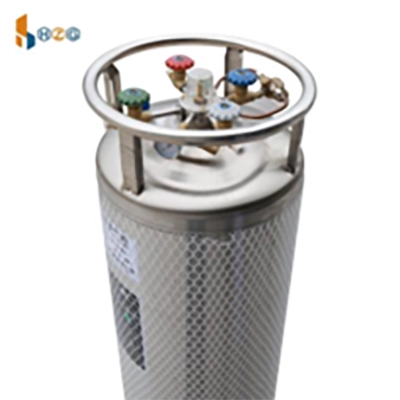
This size requirement creates a domino effect on aircraft design. These large, cylindrical, or conformal tanks are difficult to integrate into the traditional "tube-and-wing" shape of modern aircraft. Furthermore, the cryogenic temperature of liquid hydrogen demands a "tank-within-a-tank" design, known as a Dewar, with a vacuum layer for insulation. These hydrogen tank systems are complex and add weight, which is always the enemy of aircraft efficiency. Ensuring the long-term reliability and safety of these cryogenic fuel systems during millions of flight cycles is a top priority for researchers.
Beyond the aircraft itself, there's the challenge of building a global hydrogen infrastructure. Airports will need to be completely redesigned to safely store and transfer massive quantities of liquid hydrogen. This includes developing new refueling technologies, leak detection systems, and safety protocols. We also need to scale up hydrogen production dramatically, ensuring it's "green" hydrogen produced using renewable energy. I know from talking to clients that logistics are a major concern. For a business owner like Mark, the reliability of the hydrogen distribution network from the production plant to the airport will be just as important as the quality of the gas itself.
How Will Aircraft Design Evolve to Accommodate Hydrogen Fuel Systems?
The unique properties of liquid hydrogen fuel mean that the aircraft of tomorrow might look very different from those of today. Integrating bulky cryogenic fuel tanks is the central challenge driving new aircraft design concepts. Engineers can't just replace the kerosene in the wings with hydrogen; the physics won't allow it. The wings are not thick enough to hold large, insulated cylindrical tanks.
This has led to several innovative aircraft concepts. One popular idea is to place two large hydrogen tanks in the rear fuselage of the aircraft, behind the passenger cabin. This maintains a relatively conventional aerodynamic shape but reduces space for passengers or cargo. Another futuristic concept is the "Blended Wing Body" (BWB), where the fuselage and wings are integrated into a single, wide structure. This shape offers much more internal volume, making it ideal for housing large liquid hydrogen tank systems without compromising passenger space. This design could also offer significant aerodynamic benefits.
The propulsion system also impacts the aircraft's design. An aircraft powered by hydrogen combustion might have engines that look similar to today's, but they will be larger and optimized for burning hydrogen fuel. For an aircraft powered by fuel cells, the design could be more radical. Multiple smaller electric fans could be distributed along the wings for greater efficiency, a concept known as distributed propulsion. This is a thrilling time in aerospace technology, where the need for a new fuel is unlocking a new era of creative and efficient aircraft design. Each new aircraft technology brings us closer to the goal of sustainable aviation.
Which Aerospace Pioneers are Making Hydrogen Aircraft a Reality?
The transition to hydrogen isn't just a theoretical exercise; major players in the aerospace industry are investing billions to make it happen. Airbus has been a vocal leader, unveiling its ZEROe concepts with the ambitious goal of launching the first zero-emission commercial aircraft by 2035. They are exploring both hydrogen combustion and fuel cell pathways for different aircraft sizes. Their commitment has sent a powerful signal to the entire supply chain that the hydrogen revolution is coming.
In the UK, the Aerospace Technology Institute (ATI) is funding numerous projects, including the development of a demonstrator aircraft. One of the most exciting projects is led by Cranfield Aerospace Solutions, which is working to convert a small, 9-seat Britten-Norman Islander regional aircraft to run on a hydrogen fuel cell system. This project, which involves a practical flight test, is crucial for gaining real-world experience and regulatory approval for hydrogen systems for aircraft. These smaller-scale projects are vital stepping stones toward certifying hydrogen propulsion for larger passenger aircraft.
Other companies are making significant strides as well. ZeroAvia has already conducted test flights of a small aircraft powered by a hydrogen fuel cell system. In my line of work, we are seeing increased inquiries for high-purity gases for these R&D efforts. From the specialized gases used in manufacturing lightweight composite tanks to the Argon needed for welding advanced alloys in aircraft engines, the entire ecosystem is gearing up. The collaboration between these innovative aerospace companies and the industrial gas sector is essential for a successful transition to hydrogen.
How Critical is Gas Purity for Hydrogen Fuel Cell Technologies?
This is a question that directly impacts my business and the businesses of my customers. For hydrogen combustion engines, the purity of the hydrogen fuel is important, but for hydrogen fuel cell technology, it is absolutely critical. A fuel cell stack is a highly sensitive piece of equipment. It works by passing hydrogen over a platinum catalyst, which is extremely susceptible to contamination.
Impurities as small as a few parts per million—things like sulfur, ammonia, or carbon monoxide—can poison the catalyst. This process, known as catalyst degradation, permanently reduces the fuel cell's performance and lifespan. For an aircraft, where reliability is paramount, using anything less than ultra-high-purity hydrogen is not an option. This is why international standards, like ISO 14687, specify stringent purity levels for hydrogen fuel. Meeting these standards requires advanced production and purification techniques.
This is where a supplier's expertise becomes a key selling point. I always emphasize to my partners that quality control isn't just a box to check; it's the foundation of our business. For anyone looking to supply the future hydrogen aviation market, being able to guarantee and certify the purity of your product is non-negotiable. This is especially true for an electric aircraft powered by liquid hydrogen fuel cells, where the entire aircraft propulsion system depends on the quality of the fuel. As a factory with multiple production lines, we have dedicated processes to ensure every batch of our Bulk High Purity Specialty Gases meets or exceeds these international standards, providing the reliability that the aerospace sector demands.
What Kind of Hydrogen Infrastructure is Needed to Support a Global Fleet?
An aircraft is only one part of the equation. For hydrogen-powered aviation to become a reality, a massive, worldwide hydrogen infrastructure must be built. This is a challenge on the scale of the original construction of the global airport network. Airports will need to become energy hubs, capable of producing or receiving, storing, and distributing enormous volumes of liquid hydrogen.
This involves building large-scale hydrogen liquefaction plants either at the airport or nearby. Cryogenic hydrogen would then be stored in massive, heavily insulated tanks on-site. From there, a new generation of refueling trucks or hydrant systems, specifically designed for cryogenic fluids, would be needed to service each aircraft. Safety is the number one priority. The entire infrastructure, from the hydrogen production facility to the nozzle that connects to the aircraft system, must be engineered with redundant safety features to handle this powerful fuel.
The logistical challenge is immense, but it also represents a tremendous business opportunity. It will require investment in pipelines, cryogenic transport ships, and storage facilities. Companies that specialize in cryogenic equipment, like manufacturers of low temperature insulated gas cylinders, will see huge demand. For procurement officers like Mark, this means building relationships now with suppliers who understand the complexities of both liquid and gaseous hydrogen. Securing a place in this future supply chain means thinking about the entire ecosystem, not just the fuel itself.
Are You Ready for the Transition to Hydrogen in the Aerospace Sector?
The transition to hydrogen in the aviation sector is no longer a question of "if," but "when." The momentum is building, driven by environmental needs, regulatory pressure, and technological innovation. For business leaders, this is a moment of opportunity. The shift will create new markets and demand new expertise. Companies that can reliably supply high-purity hydrogen, provide logistical solutions, and understand the stringent quality demands of the aerospace sector will thrive.
As someone who has spent years in the industrial gas business, I've seen how new technologies create new leaders. The companies that succeed are the ones that anticipate change and prepare for it. Start by educating yourself and your team on hydrogen technologies. Understand the difference between fuel cells and combustion, and the critical role of purity. Begin to evaluate your supply chain partners. Do they have the technical expertise and quality certifications to serve the aerospace market? Can they handle the logistics of delivering a product like liquid hydrogen?
This is a long-term play. The first flights powered by liquid hydrogen on a commercial scale are still about a decade away. But the groundwork is being laid today. The research is being done, the prototypes are being built, and the supply chains are being formed. Now is the time to ask the right questions and position your business to be a part of the clean aviation revolution. The future of flight is taking off, and it will be powered by hydrogen.
Key Takeaways
- Urgent Need: The aviation industry is actively seeking a zero-emission alternative to jet fuel, with liquid hydrogen emerging as the leading candidate for medium to long-range aircraft.
- Two Paths to Power: Hydrogen propulsion will primarily use two methods: direct hydrogen combustion in modified jet engines and highly efficient hydrogen fuel cells that generate electricity.
- Storage is the Main Challenge: The biggest engineering hurdle is storing bulky, cryogenic liquid hydrogen on an aircraft, which requires large, heavily insulated fuel tanks and will lead to new aircraft design.
- Purity is Paramount: For hydrogen fuel cell systems, ultra-high-purity hydrogen is not just a preference—it's a requirement to prevent damage to the sensitive catalysts.
- Infrastructure is Key: A successful transition requires building a massive global infrastructure for hydrogen production, liquefaction, storage, and refueling at airports.
- Business Opportunity: The shift to hydrogen aviation creates enormous opportunities for businesses throughout the industrial gas supply chain, from production to logistics and equipment manufacturing.