Asetilen zavodlari asetilenni qanday ishlab chiqarishini bilib oling
Asetilen (C2H2) muhim sanoat gazi boʻlib, kimyo sanoati, metallurgiya, davolash, sovutish va payvandlashda keng qoʻllaniladi. Uni ishlab chiqarish jarayoni asosan xom ashyodan kimyoviy reaksiyalar orqali sintezlanadi. Sanoatda asetilen ishlab chiqarish odatda ishlab chiqarish uchun asetilen generatorlariga tayanadi yuqori tozalikdagi asetilen gazi turli kimyoviy reaktsiyalar orqali. Jiangsu Huazhong, asetilen zavodlari ushbu muhim kimyoviy gazni qanday ishlab chiqarishini yaxshiroq tushunishga yordam berish uchun asetilen ishlab chiqarish jarayonini taqdim etadi.
Asetilen ishlab chiqarish uchun xom ashyo
Asetilen ishlab chiqarish uchun ohaktosh (CaCO3) va koks (C) kabi xom ashyo talab qilinadi. Ohaktosh kaltsiy gidroksid va karbonat angidrid olish uchun asosiy xom ashyo bo'lib, koks esa uglerod manbasini ta'minlash uchun ishlatiladi. Asetilen ishlab chiqarish jarayonida bu xom ashyo yuqori harorat va kimyoviy reaksiyalar natijasida asetilen gazini hosil qiladi.
Asetilen ishlab chiqarish jarayoni
Asetilen ishlab chiqarishning ikkita asosiy usuli mavjud: karbid usuli va asetilen generatori usuli. Ular orasida Karbid usuli eng keng tarqalgan ishlab chiqarish usuli hisoblanadi.
Karl-Xaim jarayoni
Karl-Haim jarayoni sanoatda eng ko'p ishlatiladigan asetilen ishlab chiqarish usuli hisoblanadi. Bu usul xom ashyo sifatida ohaktosh va koksdan foydalanadi va yuqori haroratli elektr pechka reaktsiyasi orqali kaltsiy gidroksid (Ca(OH)2) va karbonat angidrid (CO2) hosil qiladi. Keyin kaltsiy gidroksid suv bilan reaksiyaga kirishib, kaltsiy gidroksidi atalasini hosil qiladi, so'ngra asetilen hosil qilish uchun kaltsiy karbonat bilan reaksiyaga kirishadi.
Maxsus jarayon quyidagicha:
Kaltsiy oksidi (CaO) va karbonat angidrid (CO2) hosil qilish uchun ohaktosh yuqori haroratgacha qizdiriladi.
Keyin kaltsiy oksidi suv bilan reaksiyaga kirishib, kaltsiy gidroksidi (Ca (OH) 2) hosil qiladi.
Keyin kaltsiy gidroksid kaltsiy karbonat bilan reaksiyaga kirishib, asetilen gazini (C2H2) va kaltsiy gidroksidini hosil qiladi.
Asetilen generatori usuli
Asetilen generatori usuli ruda yoki uglerod xom ashyosini kaltsiy gidroksid bilan reaksiyaga kiritish orqali asetilen ishlab chiqaradi. Ushbu usulning afzalligi shundaki, ishlab chiqarilgan atsetilen gazi nisbatan toza bo'lib, kimyoviy tajribalarda va sanoat ishlab chiqarishida keng qo'llanilishi mumkin.
Asetilenni tozalash jarayoni
Asetilen ishlab chiqarilgandan so'ng, asetilen sifatini ta'minlash uchun bir qator tozalash bosqichlari talab qilinadi. Birinchidan, asetilen gazi sovutiladi va kirlarni tozalash uchun suv yuvish moslamasidan o'tkaziladi. Keyin, asetilen gazi mumkin bo'lgan qattiq zarralarni olib tashlash uchun filtrlanadi. Va nihoyat, asetilenning tozaligi standartga mos kelishini ta'minlash uchun gaz adsorbent tomonidan qo'shimcha ravishda tozalanadi.
Asetilenni saqlash va tashish
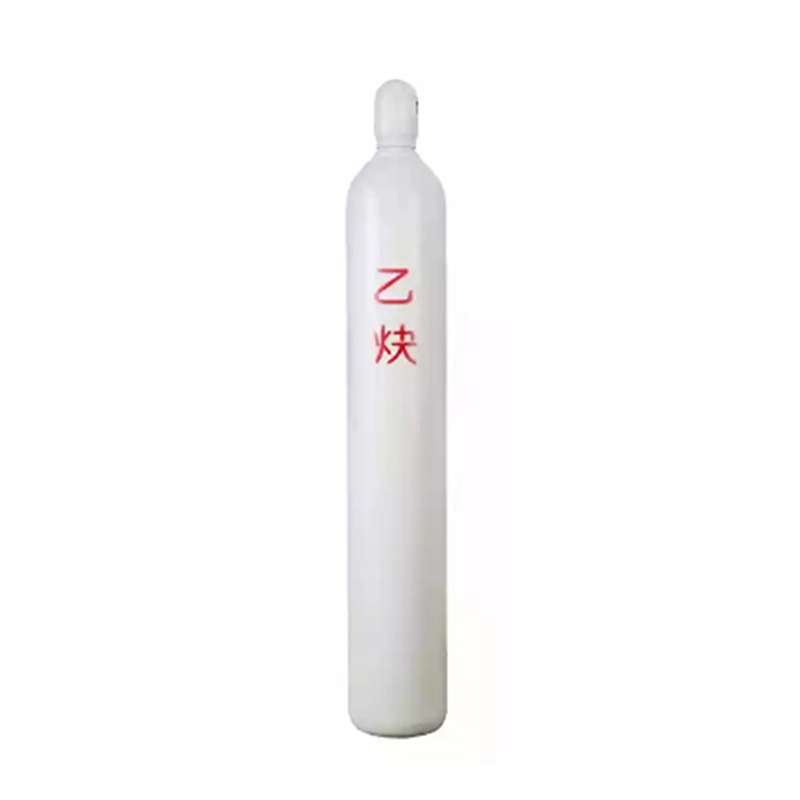
Asetilen yonuvchan va portlovchi gaz bo'lgani uchun saqlash va tashishda alohida e'tibor berilishi kerak. Asetilen odatda maxsus gaz ballonlarida siqilgan gaz shaklida saqlanadi. Tashish vaqtida asetilen gaz ballonlari oqish va portlash hodisalarini oldini olish uchun qat'iy xavfsizlik standartlariga javob berishi kerak.
Asetilenni qo'llash
Asetilen muhim sanoat xom ashyosi sifatida ko'plab sohalarda keng qo'llaniladi. Payvandlash sohasida asetilen kislorod bilan aralashtirilganda yuqori haroratli olovni hosil qilishi mumkin, bu metallni kesish va payvandlashda keng qo'llaniladi. Kimyo sanoatida asetilen sirka kislotasi, akrilonitril, etilen va boshqalar kabi turli xil kimyoviy mahsulotlarni sintez qilish uchun muhim xom ashyo hisoblanadi. Bundan tashqari, asetilen ham sovutish, tibbiyot va boshqa sohalarda muhim ahamiyatga ega.
Xulosa
Asetilen zamonaviy sanoatda ajralmas va muhim gazdir. Asetilen gazini ishlab chiqarish jarayoni murakkab va nozik bo'lib, kimyoviy reaktsiyalar, gazni tozalash, saqlash va tashishni o'z ichiga oladi. Ilm-fan va texnologiyaning rivojlanishi va ishlab chiqarish texnologiyasining doimiy innovatsiyasi bilan, asetilen gaz zavodi Shuningdek, turli sohalarni eng katta darajada rivojlantirishga ko'maklashish uchun asetilen ishlab chiqarish jarayonini doimiy ravishda optimallashtiradi.