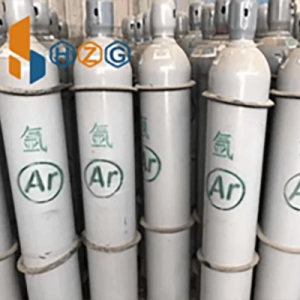
With the rapid development of the global semiconductor industry, chip manufacturing processes have fully entered the nanometer era. In this extremely precise manufacturing process, any minute environmental fluctuation or material impurity can lead to the scrapping of an entire batch of wafers. Therefore, electronic specialty gases and high-purity industrial gases play an irreplaceable role. Among them, high purity liquid argon has become an indispensable key consumable in the daily operations of semiconductor fabs due to its ultimate chemical inertness and excellent physical properties.
This article will deeply analyze the core applications of liquid argon in chip manufacturing processes and provide a professional procurement guide for enterprise supply chain teams.
Core Applications: Why is Liquid Argon Inseparable from Semiconductor Manufacturing?
In the Front-End-of-Line (FEOL) semiconductor manufacturing process, liquid argon for semiconductors is primarily applied in the following core stages that determine product yield:
- Physical Vapor Deposition (PVD) / Sputtering: Ultra-pure argon gas, formed by the gasification of liquid argon, is the most mainstream working gas in PVD sputtering processes. In the vacuum chamber, argon ions are accelerated by an electric field to bombard the target material, causing target atoms to dislodge and deposit evenly on the wafer surface to form a metal film. High purity is a prerequisite to ensure the density and electrical consistency of the film.
- Absolutely Safe Inert Protective Atmosphere: During the pulling process of monocrystalline silicon (such as the Czochralski process) and high-temperature annealing processes, silicon easily reacts with oxygen at high temperatures. Therefore, argon gas must be continuously introduced to replace the air, providing an absolutely inert environment isolated from oxygen and moisture, thereby ensuring the perfect growth of the silicon crystal lattice.
- Cryogenics and Wafer Cleaning Technology: In advanced processes such as Extreme Ultraviolet (EUV) lithography, the ultra-low temperature characteristics of liquid argon (boiling point -186°C) are sometimes applied to the cooling systems of precision equipment. Simultaneously, argon aerosol technology is also used for nanometer-scale physical micro-cleaning on wafer surfaces, which can non-destructively remove minute particulate matter.
Quality Determines Yield: The Strict Standards of High-Purity Liquid Argon
The semiconductor industry’s requirements for raw materials are exceptionally harsh. Ordinary industrial-grade liquid argon usually only needs to reach a purity of 99.9% or 99.99%, but this is far from meeting the needs of chip manufacturing. For qualified high purity liquid argon, the baseline purity is typically required to reach 99.999% (5N), and in advanced nodes, it even needs to reach 99.9999% (6N) or higher.
More crucial is impurity control. The content of oxygen, nitrogen, moisture, total hydrocarbons (THC), and trace metal ions must be strictly controlled at the ppb (parts per billion) or even ppt (parts per trillion) level. Even if a minute amount of impurities mixes into the gas pipeline, it will form micro-defects on the wafer surface, causing chip short circuits or current leakage, directly pulling down the yield rate and bringing huge economic losses.
Procurement Guide: How to Evaluate and Select a Professional Liquid Argon Supplier?
Given the decisive role of high-purity gases in the operation of production lines, finding and securing a fully qualified and capable liquid argon supplier is a core task for procurement and supply chain teams. When evaluating potential suppliers, it is recommended to focus on the following three dimensions:
Rigorous Quality Control and Testing Capabilities: Excellent suppliers must be equipped with top-tier trace analysis equipment such as Gas Chromatographs (GC) and Mass Spectrometers (MS). They must be able to provide a detailed COA (Certificate of Analysis) for each batch to ensure absolute consistency in purity between deliveries.
Strong Supply Chain Resilience and Delivery Stability: Fabs usually operate 24/7/365, and the cost of down-time is extremely high. Therefore, suppliers must possess massive localized liquid storage capabilities, their own fleet of cryogenic tanker trucks, and comprehensive contingency plans for emergency supply assurance.
Advanced Containers and Anti-“Secondary Contamination” Technology: No matter how high the gas purity is, it is useless if contaminated during transportation. The focus should be on the supplier’s cryogenic storage tanks and tanker inner wall treatment technologies (such as whether it has undergone Electropolishing/EP treatment), as well as the Standard Operating Procedures (SOP) for valve and pipeline purging during filling and transfer stages, ensuring that high purity can be delivered straight from the plant to the customer’s terminal.
Faaiuga
Under the continuous advancement of Moore’s Law, high purity liquid argon is not just a basic consumable, but also an “invisible escort” for advanced semiconductor processes. Scientifically and rigorously evaluating and selecting a liquid argon supplier with comprehensive strength to ensure the high-quality and stable supply of liquid argon for semiconductors is the key cornerstone for every semiconductor manufacturing enterprise to improve process yield and win in global market competition.