
A Guide to Ultra-High Purity Gases Used in Semiconductor Manufacturing
We've been running a factory in China that specializes in producing industrial gases. From my vantage point, I’ve witnessed the incredible evolution of technology, all powered by something most people never see: ultra-high purity gases. The tiny microchips in your phone, computer, and car are marvels of modern engineering, but their creation is impossible without a precise and flawless supply of these specialty gases.
You understand the importance of quality and a reliable supply chain, but you might wonder why the standards for semiconductor gases are so astronomically high. Why does a shipment of Argon need to be 99.9999% pure? This guide will pull back the curtain on the world of semiconductor fabrication. We'll explore the specific gases used, what they do, and why their purity is the single most critical factor. By the end, you'll have a much clearer understanding of the products you source and be better equipped to communicate their value to your customers.
Why Are Specialty Gases So Critical for Semiconductor Fabrication?
Imagine building a skyscraper where a single misplaced grain of sand could cause the entire structure to collapse. That’s the level of precision required in the semiconductor manufacturing industry. The "building blocks" of this industry aren't bricks and mortar, but atoms, and the "tools" are often highly specialized gases. The entire fabrication of an integrated circuit happens on a microscopic scale, where layers of materials, often only a few atoms thick, are deposited onto or etched away from a silicon wafer.
These semiconductor processes are incredibly sensitive. Any unwanted particle or chemical impurity can disrupt the delicate architecture of the microchip, rendering it useless. This is where gases are used. They create the ultra-clean environments, provide the raw materials for new layers, and act as the chemical "scalpels" that carve the intricate pathways for electricity. The semiconductor manufacturing process is a complex dance of chemical reactions, and the gases are the lead dancers. Without a constant, reliable, and exceptionally pure supply of these gases, modern electronics simply wouldn't exist.
The gases used in semiconductor manufacturing are not your standard industrial products. They are engineered to meet purity levels that are difficult to comprehend, often measured in parts per billion or even parts per trillion. This is because the performance of semiconductor devices is directly tied to the perfection of their atomic structure. A reactive molecule of oxygen or water vapor in what should be an inert gas can cause oxidation, changing the electrical properties of the circuit and leading to defects. This is why the specialty gases industry is so vital to the world of technology.
What Are the Main Categories of Gases Used in Semiconductor Manufacturing?
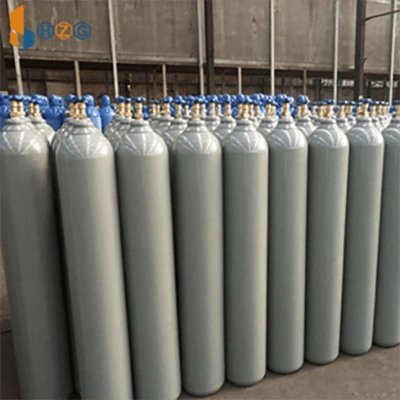
When we talk about gases in semiconductor manufacturing, they generally fall into a few key categories based on their function. Understanding these groups helps clarify the role each gas plays in the complex production process. It’s not just one or two gases; a modern semiconductor fab requires over 30 different gases and mixtures to function.
First are the bulk gases. These are the workhorses, used in massive quantities throughout the facility. Think of them as the foundational atmosphere of the fab. The most common are:
- Nitrogen (N₂): Used for purging chambers and equipment to remove contaminants and create an inert environment.
- Oxygen (O₂): Used to grow high-quality silicon dioxide (SiO₂) layers, which act as insulators.
- Hydrogen (H₂): Used for cleaning surfaces and in specific deposition processes.
- Argon (Ar): An inert gas used to create a stable environment for processes like sputtering.
Next are the specialty gases, also known as electronic specialty gases. These are the highly specific, often reactive or hazardous, gases that perform the critical tasks of etching and deposition. They are used in smaller quantities but have a much higher cost and require extremely careful handling. These can be further divided into groups like:
- Deposition Gases: These gases, like Silane (SiH₄), are the source of the material used to build the layers of the chip. They decompose and deposit a thin film of material onto the silicon wafer.
- Etchant Gases: These are reactive gases used to selectively remove material. Examples include fluorine compounds like Carbon Tetrafluoride (CF₄) and hydrogen chloride (HCl). They are used in the etching process to carve the circuit patterns.
- Dopant Gases: These gases are used to "dope" the silicon, which means intentionally introducing a specific impurity (a dopant) to change its electrical properties. This is fundamental to creating transistors. Common dopant gases include Arsine (AsH₃) and Phosphine (PH₃).
How Does Nitrogen Gas Act as a Workhorse in Semiconductor Fabs?
If you were to walk through a semiconductor fabrication facility, the most ubiquitous gas you would encounter is Nitrogen. While it doesn't always take part in the main chemical reactions that build the chip, its role is absolutely essential for creating the conditions for those reactions to succeed. Nitrogen is used primarily for its inertness; it doesn't readily react with other elements, making it the perfect "filler" gas.
The primary use for Nitrogen is in purging and creating an inert atmosphere. Before any sensitive semiconductor process can begin, the chamber must be completely free of contaminants like oxygen, water vapor, and dust. High-purity Nitrogen is flushed through the chamber to push out these unwanted elements. This prevents accidental oxidation or other reactions that would ruin the wafer. This same principle is applied to the tools and transport pods (known as FOUPs) that carry silicon wafers between different stages of the manufacturing process.
Furthermore, Nitrogen plays a critical role in photolithography, the process of printing the circuit design onto the wafer. In modern deep ultraviolet (DUV) lithography, the space between the lens and the wafer is filled with ultra-pure Nitrogen (or Argon) to allow the short-wavelength light to pass through without being absorbed by air. Without this inert environment, the process would be impossible. In my experience supplying to fabs, the demand for a continuous, high-volume, and high-purity Nitrogen supply is non-negotiable.
What Role Does Argon Play in Creating the Perfect Environment?
Like Nitrogen, Argon is a noble gas, meaning it is chemically inert. However, Argon is used for specific applications where its heavier atomic weight provides an advantage. One of the most important of these applications is sputter deposition, or sputtering. This is a physical vapor deposition process used to lay down thin metal films, which form the wiring of the integrated circuit.
In sputtering, a high voltage is applied in a vacuum chamber filled with Argon gas. This creates a plasma of positively charged Argon ions. These ions are accelerated and smash into a "target" made of the metal we want to deposit (like copper or aluminum). The force of the collision knocks metal atoms off the target, which then fly across the chamber and coat the silicon wafer in a thin, uniform layer. Argon is perfect for this because it's heavy enough to effectively dislodge the target atoms but chemically inert enough that it won't react with the metal film it's helping to create. It provides the perfect environment for sputter deposition of metals.
Another key use for Argon is in plasma etching. In this etching process, Argon is often mixed with a reactive etchant gas. The Argon helps to stabilize the plasma and physically bombard the surface, assisting the chemical etch and creating more precise, vertical cuts in the material. A reliable supply of Argon gas cylinders is crucial for any facility performing metallization or advanced etching.
Can You Explain How Hydrogen is Used for Deposition and Cleaning?
While Nitrogen and Argon are valued for being unreactive, Hydrogen is valued for being highly reactive, but in a very clean and controlled way. Hydrogen is used extensively in semiconductor manufacturing for cleaning surfaces and in a specific type of deposition called epitaxial growth. Its small atomic size allows it to penetrate and react in ways other gases cannot.
Before a new layer can be grown on a wafer, the surface must be perfectly clean, down to the atomic level. Hydrogen gas is used in a high-temperature process called a "hydrogen bake" to remove any native oxide (a thin, naturally occurring layer of silicon dioxide) that has formed on the silicon surface. The hydrogen reacts with the oxygen, forming water vapor (H₂O) which is then pumped out of the chamber, leaving a pristine silicon surface ready for the next step.
Hydrogen is also a key component in epitaxial growth (or "epi"), a process that grows a single-crystal layer of silicon on top of the silicon wafer. This new layer has a perfect crystal structure and precisely controlled dopant levels. Hydrogen acts as a carrier gas for the silicon source gas (like silane or trichlorosilane). It also ensures a clean growth environment by scavenging any stray oxygen atoms. The quality of this epitaxial layer is fundamental to the performance of high-end processors, making the purity of the Hydrogen cylinder supply absolutely critical.
What Are Etchant Gases and How Do They Carve Microscopic Circuits?
If deposition is about building up layers, etching is about selectively carving them away to create the circuit patterns. Think of it as microscopic sculpting. After a pattern is defined using photolithography, etchant gases are used to provide the chemical means to remove material from the unprotected areas of the wafer. This is one of the most complex and critical steps in chip manufacturing.
The gases used in the etching process are typically fluorine, chlorine, or bromine-based compounds. The choice of gas depends on the material being etched.
- Fluorine-based gases (e.g., CF₄, SF₆, NF₃) are excellent for etching silicon and silicon dioxide.
- Chlorine-based gases (e.g., Cl₂, BCl₃, HCl) are often used for etching metals like aluminum.
These reactive gases are introduced into a plasma chamber. The plasma breaks the gas molecules apart into highly reactive ions and radicals. These radicals then react with the surface of the wafer, forming a new volatile compound that can be easily pumped away, thus "etching" the material. The precision required is immense; the goal is to etch straight down (anisotropically) without undercutting the patterned layer. Modern semiconductor fabs use complex gas mixtures and carefully controlled plasma conditions to achieve this.
What is Chemical Vapor Deposition (CVD) and Which Gases Are Involved?
Chemical Vapor Deposition (CVD) is a cornerstone deposition process in semiconductor manufacturing. It's the primary method used to create the various insulating and conductive thin films that make up a semiconductor device. The basic idea is to flow a gas (or a mixture of gases) over a heated wafer. The heat causes the gas to react or decompose on the wafer's surface, leaving behind a solid film of the desired material.
| The range of gases used in CVD is vast, as each is designed to deposit a specific material. Some of the most common gases and the films they produce are: | Deposition Gas | Chemical Formula | Film Deposited |
|---|---|---|---|
| Silane | SiH₄ | Polysilicon (p-Si) | |
| Dichlorosilane + Ammonia | SiH₂Cl₂ + NH₃ | Silicon Nitride (Si₃N₄) | |
| Tetraethylorthosilicate (TEOS) | C₈H₂₀O₄Si | Silicon Dioxide (SiO₂) | |
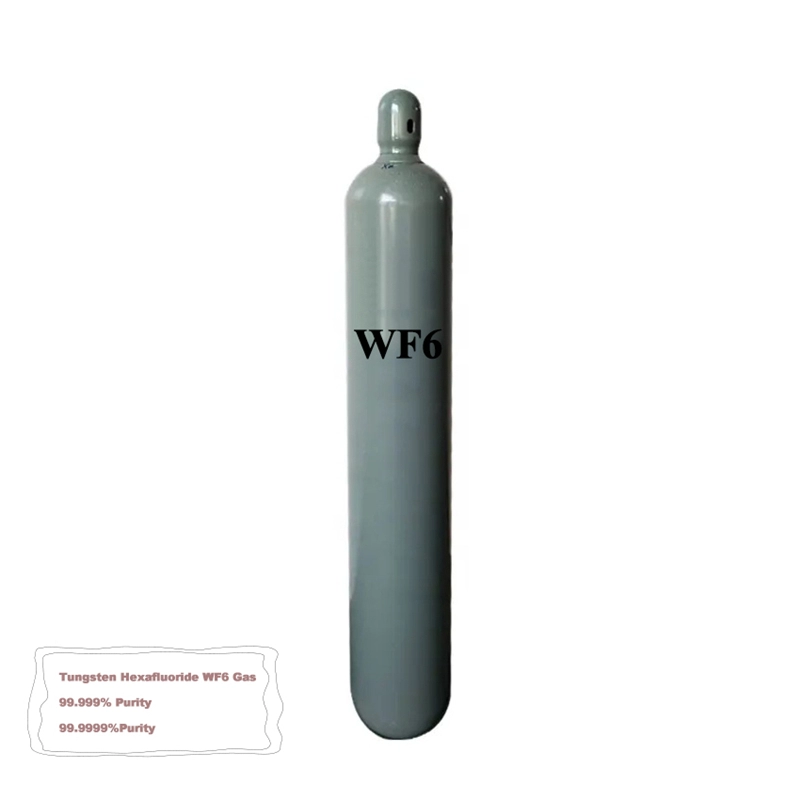
| Tungsten Hexafluoride | WF₆ | Tungsten (W) |
Each of these reactions requires incredibly stable conditions and extremely high-purity gases. For example, when depositing a polysilicon layer using Silane, any oxygen impurity in the gas stream would cause silicon dioxide to form instead, ruining the conductive properties of the layer. This is why we, as a supplier, focus so heavily on the purification and analysis of these deposition gases. The entire library of Bulk High Purity Specialty Gases we offer is geared towards meeting these stringent requirements.
Why is Ultra-High Purity the Most Important Factor for Semiconductor Gases?
I cannot overstate this: in the semiconductor industry, purity is everything. The term high-purity doesn't mean 99% or even 99.9%. For semiconductor gases, we are talking about ultra-high purity (UHP), which is typically 99.999% (often called "five nines") or higher. For some critical process gases, the requirement can be 99.9999% ("six nines") or even higher. The reason is simple: contaminants kill performance.
The features on a modern microchip are measured in nanometers (billionths of a meter). At this scale, a single foreign particle or unwanted molecule is like a boulder in the middle of a superhighway. An impurity can:
- Alter Electrical Properties: A stray sodium ion can change the threshold voltage of a transistor, causing it to switch on or off at the wrong time.
- Create Structural Defects: An oxygen molecule can disrupt the perfect crystal lattice during epitaxial growth, creating a "dislocation" that impedes electron flow.
- Cause Short Circuits: A metallic particle can bridge two adjacent conducting lines, creating a dead short.
- Reduce Yield: The more contaminants present, the higher the number of defective chips on each wafer, which directly impacts profitability.
This is why, as a manufacturer, our biggest investment is in purification and analytical equipment. Every batch of gas must be tested to ensure it meets the parts-per-billion (ppb) or parts-per-trillion (ppt) specifications required by our clients. The demand for high purity gases is what drives the entire specialty gas market for electronics.
How Do We Ensure the Quality and Reliable Supply of High-Purity Gases?
For a procurement officer like Mark, this is the most important question. A great price is meaningless if the gas quality is inconsistent or the shipment is late. I've heard the horror stories: suppliers providing fraudulent certificates of analysis, or a shipment of speciality gases being held up in customs for weeks, causing a production line to halt. Addressing these pain points is at the core of our business philosophy.
Ensuring quality starts with the purification process. We use advanced systems like cryogenic distillation and specialized adsorbent materials to remove trace impurities. But the process doesn't end there. The most critical step is verification. We use state-of-the-art analytical instruments like Gas Chromatograph-Mass Spectrometers (GC-MS) to test every single cylinder before it is shipped. We provide our customers with a detailed and authentic Certificate of Analysis (COA) for every batch, guaranteeing the gas purity.
A reliable supply chain is the other half of the equation. This involves:
- Robust Cylinder Preparation: Cylinders for ultra-high purity gases undergo a special cleaning and passivation process to ensure the container itself doesn't contaminate the gas.
- Intelligent Logistics: We work with experienced logistics partners who understand the regulations for shipping high-pressure and sometimes hazardous materials internationally. We provide all necessary documentation to ensure smooth customs clearance.
- Clear Communication: Our sales and support teams are trained to provide regular updates. You will always know the status of your order, from production to final delivery. We understand that a predictable supply of high purity gases is essential for our customers to manage their own production schedules. We even offer various gas mixture options to meet specific process needs.
What Does the Future Hold for Gases in the Semiconductor Industry?
The semiconductor industry never stands still. As predicted by Moore's Law, chipmakers are constantly pushing to create smaller, faster, and more powerful devices. This relentless innovation directly impacts the gases and mixtures used in their fabrication. As we move to the next generation of semiconductor technology, with feature sizes shrinking to just a few nanometers, the requirements for gas purity will become even more extreme.
We are seeing a trend towards new materials beyond silicon, such as gallium nitride (GaN) and silicon carbide (SiC), which require new and different process gases for etching and deposition. There is also a move towards more complex 3D architectures, like FinFET and Gate-All-Around (GAA) transistors, which demand even greater precision in the deposition and etch steps. This means the specialty gas industry must constantly innovate to develop new molecules and achieve even higher levels of purification.
From my perspective as a supplier, the future is about partnership. It's no longer enough to just sell a cylinder of gas. We must work closely with our customers in the electronics manufacturing sector to understand their future technology roadmaps. This allows us to anticipate the need for new high-purity gases and invest in the production and analytical capabilities to supply them. The invisible heroes of the semiconductor world—the gases—will continue to be at the forefront of technological advancement.
Key Takeaways
As you source industrial gases for the demanding semiconductor market, here are the most important things to remember:
- Purity is Paramount: The single most critical factor is ultra-high purity. Contaminants, even at parts-per-billion levels, can cause catastrophic device failure and reduce production yields.
- Gases Have Specific Jobs: Gases are not interchangeable. They are highly specialized tools used for distinct processes like creating inert atmospheres (Nitrogen, Argon), building layers (deposition gases like Silane), and carving circuits (etchant gases like CF₄).
- The Supply Chain is Critical: A reliable supplier does more than just sell a product. They ensure quality through rigorous testing, provide authentic certifications, manage complex logistics, and maintain clear communication to prevent costly production delays.
- Technical Knowledge Adds Value: Understanding why a certain gas is used and why its purity is so crucial allows you to be a more effective partner to your own customers, justifying quality and building long-term trust.
- The Industry is Evolving: The push for smaller and more powerful chips means the demand for new, even purer specialty gases will only continue to grow. Partnering with a forward-looking supplier is key to staying ahead.